
The Secret to a Thriving Muskoka Garden
By Chris Occhiuzzi
Native plants don't just make beautiful gardens. They create landscapes that thrive, support wildlife, and feel perfectly at home in Muskoka.
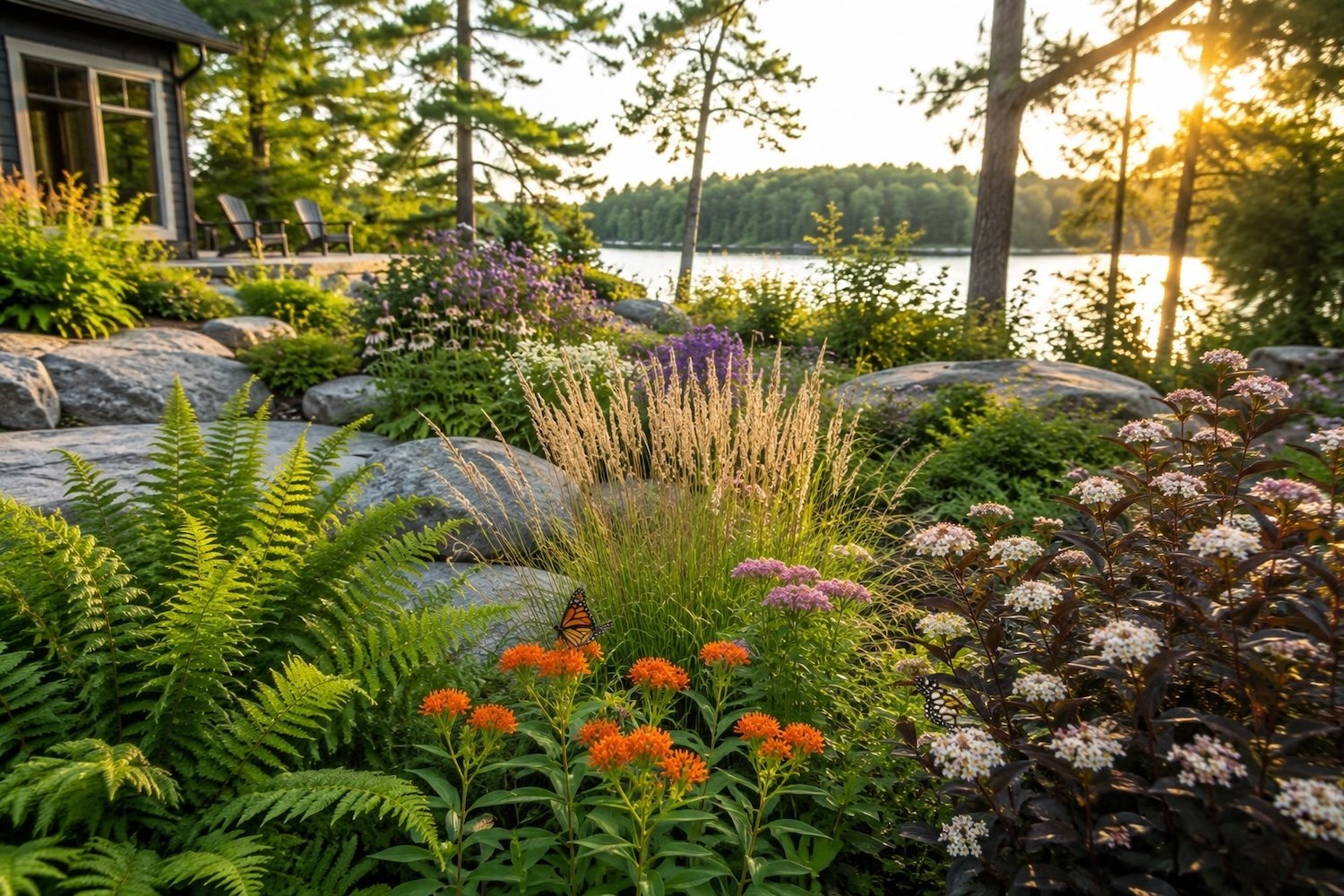
If you've spent any amount of time in Muskoka, you already know there's something special about the landscape. The rugged Canadian Shield, towering pines, winding shorelines, and dense forests all come together to create a look that simply can't be replicated anywhere else. So it only makes sense that our gardens should feel just as at home.
When it comes to gardens and landscaping, more Muskoka homeowners and cottagers are discovering the benefits of using native plants - species that have evolved right here and are naturally suited to the region's climate. As local landscaping experts often point out, native plants aren't just beautiful; they're practical investments that often outperform many ornamental alternatives. Because they're adapted to Muskoka's weather patterns and challenging winters, they require less maintenance while offering greater long-term success.
"Plant things that grow here so that they survive," says Brooke Radtke of Mike's Landscaping.
The reasoning is simple: native plants can save property owners considerable time, money, and effort. A great example is Joe Pye Weed, a plant with a somewhat unfortunate name but a vibrant appearance.
Radtke describes it as "a big, beautiful, tall, pink-flowering perennial that comes back every year." Joe Pye Weed delivers vibrant colour, attracts pollinators, and creates a natural Muskoka aesthetic that feels right at home along cottage driveways and waterfront gardens.
For homeowners looking to fill shaded spaces, it's hard to beat the classic Ostrich Fern. It creates lush, low-maintenance greenery that fills gardens naturally while requiring very little ongoing care.
"It's a big, beautiful, showy fern that comes back every year," explains Radtke. "They spread, they fill in spaces, and it just looks so natural to Muskoka."
Those wanting four-season visual interest may want to consider Little Bluestem, a native grass known for its changing colours throughout the year. Its blue-green foliage transforms into rich copper-red tones in autumn, adding warmth and texture long after many other plants have faded for the season.
Native planting isn't simply about aesthetics; it's also about supporting and protecting the local ecosystem. Butterfly Milkweed plays an important role in supporting Monarch butterflies, while Wild Bergamot, a native bee balm, provides an important food source for pollinators. New England Aster extends that support well into the fall, offering late-season blooms when many other flowers have finished.
One of the greatest rewards of planting native is seeing your garden come alive.
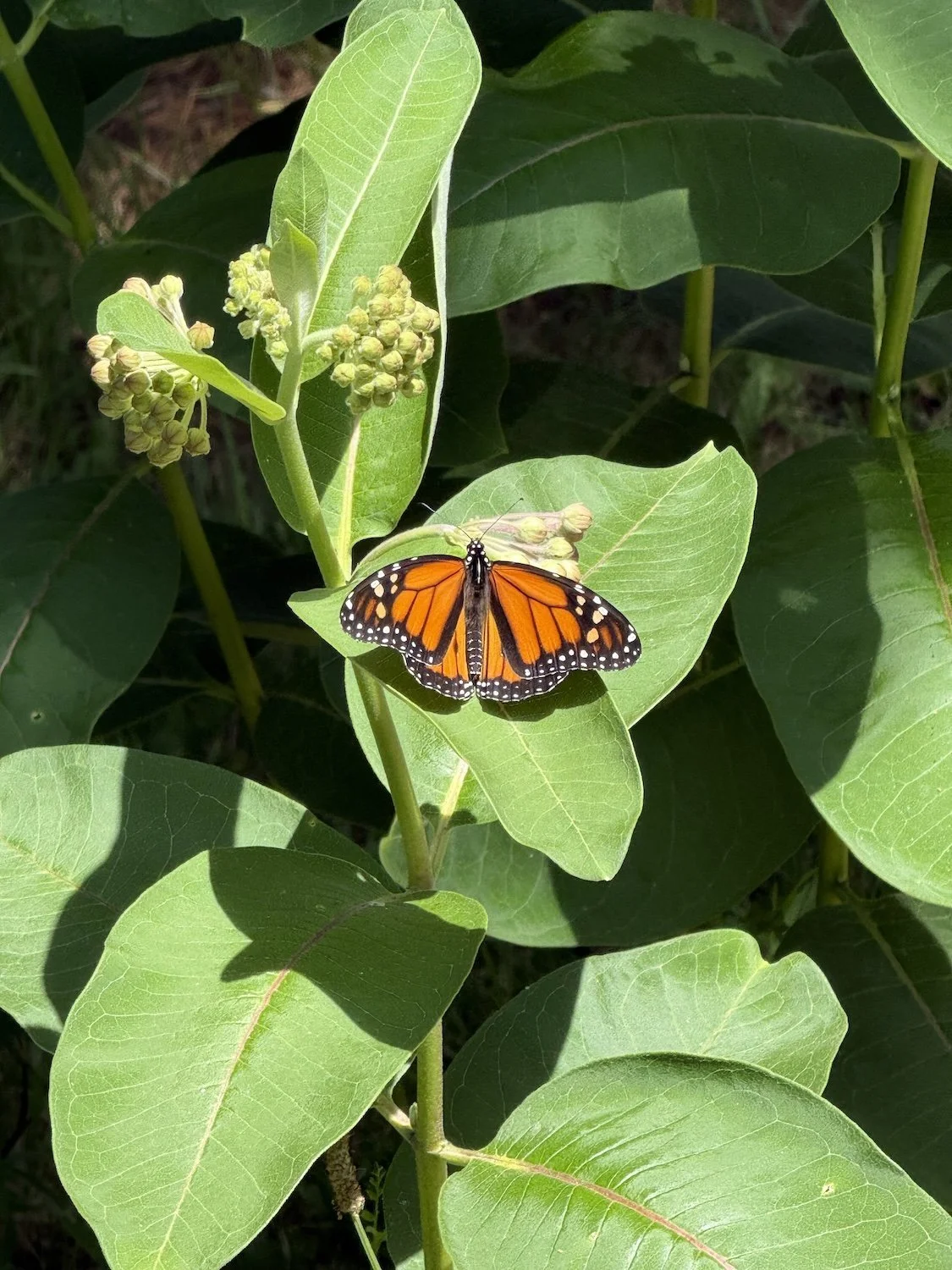
A Monarch rests on butterfly milkweed - the only plant its caterpillars can feed on.
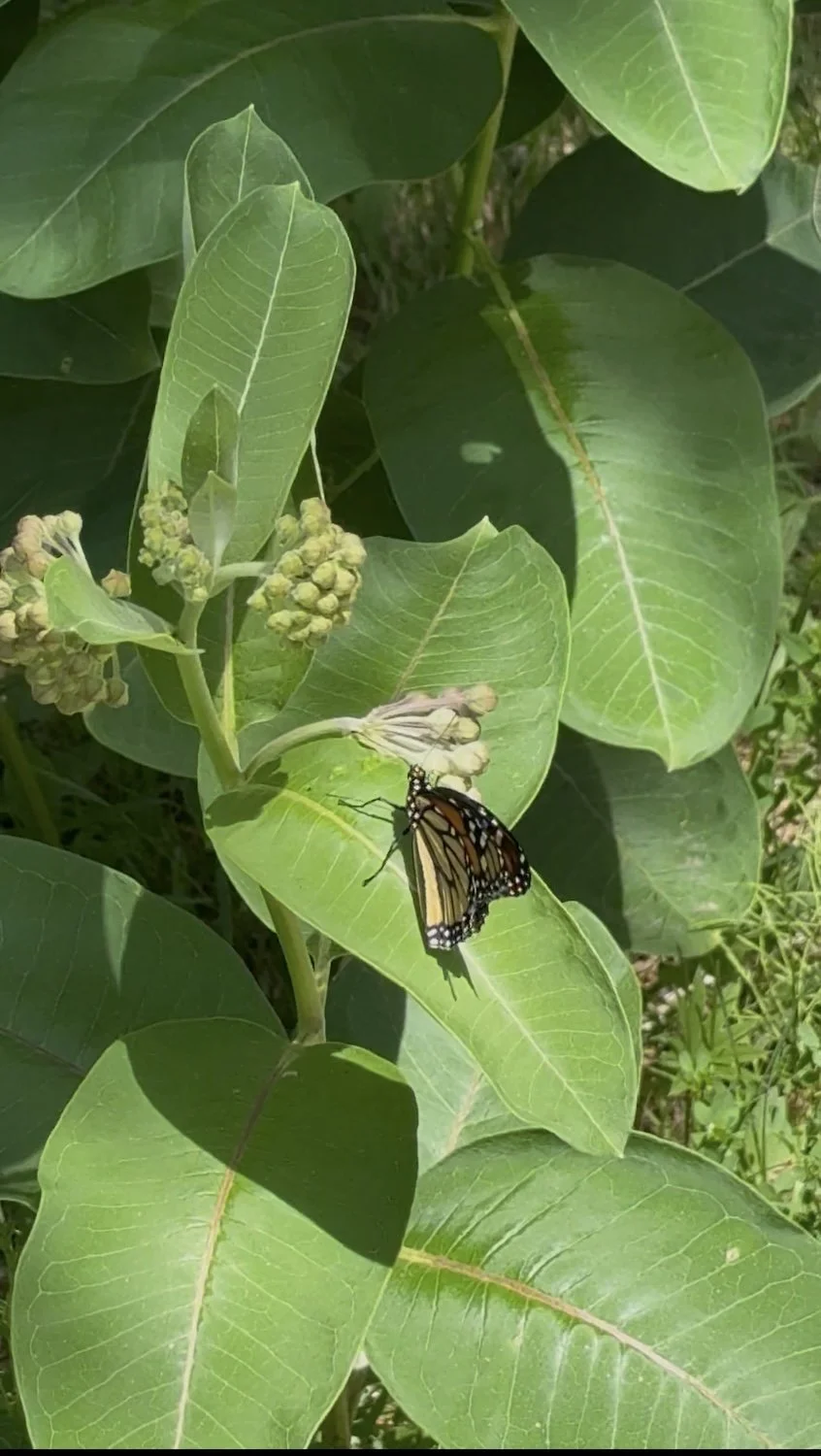
Monarchs rely on milkweed to complete their life cycle.
On a warm summer afternoon, it's not unusual to spot a Monarch drifting from milkweed to milkweed or butterflies dancing among the blooms of a Ninebark shrub. Monarch butterflies rely on milkweed to lay their eggs, and it is the only plant their caterpillars can feed on, making it one of the most important native plants you can grow. Flowering shrubs such as Ninebark provide valuable nectar and shelter for a variety of butterfly species and other pollinators throughout the season. These aren't just beautiful moments - they're signs of a healthy ecosystem, where plants and wildlife have evolved together for generations. Choosing native plants means creating a landscape that's every bit as welcoming to pollinators as it is to the people enjoying it.
Ninebark shrubs also provide year-round interest, with varieties featuring deep purple, golden-yellow, or bright orange foliage depending on the season. Their delicate white or pink spring flowers and distinctive peeling bark add both structure and texture to the landscape.
While many of these native plants feature shades of pink, there are plenty of other options to add colour throughout the landscape. Native Black-eyed Susans offer cheerful yellow blooms, while Fragrant Sumac features green foliage, yellow flowers, and red berries in summer before transforming into brilliant shades of orange, red, and purple in the fall.
"Fragrant Sumac is a great low-lying bush to fill in areas and one that the native wildlife don't actually eat, which is nice," adds Radtke.
Beyond sustainability, there's another reason many property owners are embracing native plants: authenticity.
"If you're in Muskoka, nine times out of ten you're going to want a Muskoka landscape," says Brooke. "It really does reduce your maintenance and provides security for your investment."
Native plants help create gardens that feel connected to the region rather than imported from somewhere else. They support wildlife, withstand Muskoka winters, reduce maintenance requirements, and enhance property value over time.
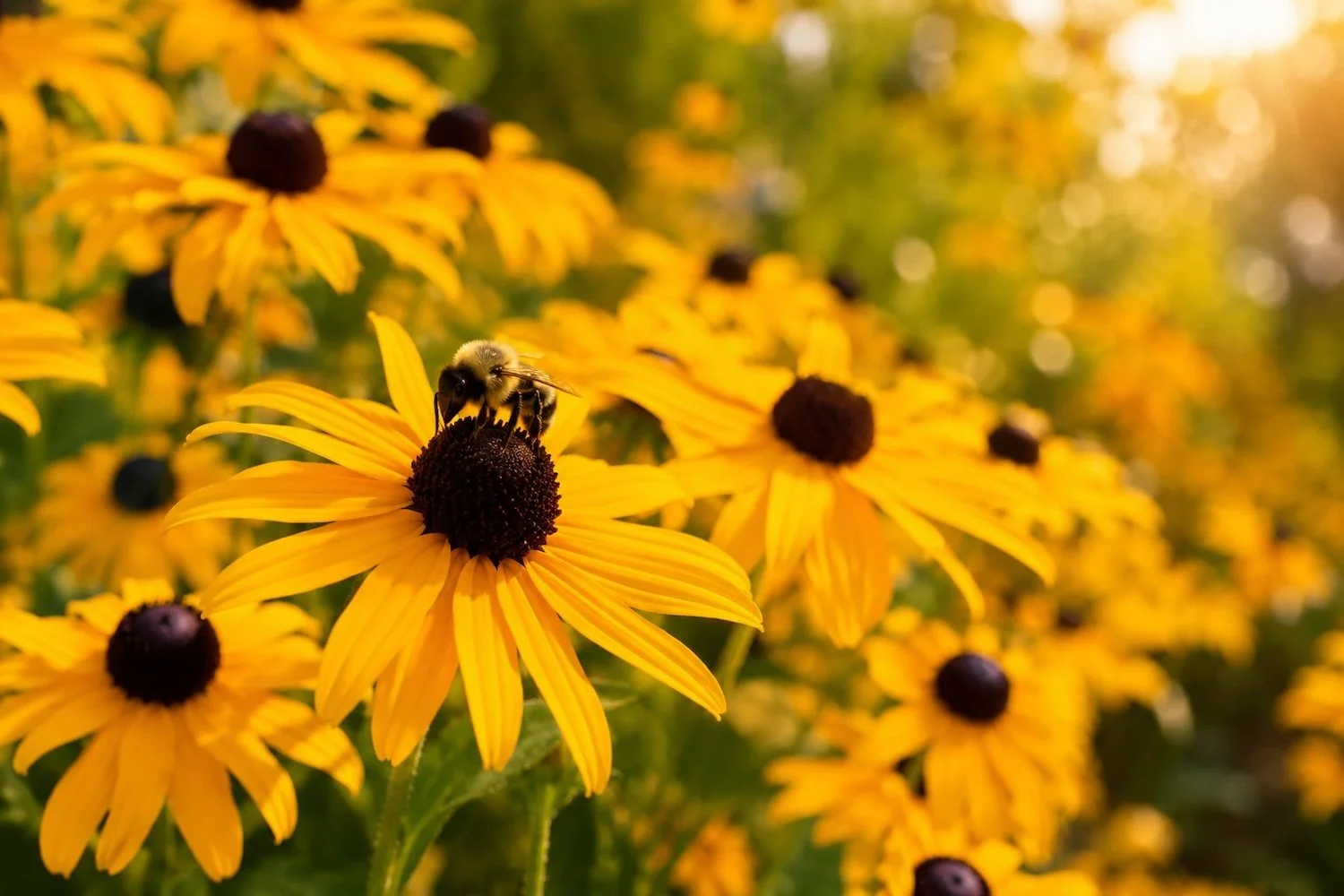
A bumblebee works the blooms of a native Black-eyed Susan.
The best Muskoka landscapes rarely look manufactured. They reflect the rugged beauty of the Canadian Shield, the shoreline, and the forests that have shaped this region for generations. Native plants have been doing exactly that for centuries.