
Meet the Quiet Travellers in Our Wetlands, Lakes and Roadsides
By Chris Occhiuzzi
Discover the remarkable turtle species that call Muskoka home, and why their seasonal journeys matter more than you might think.
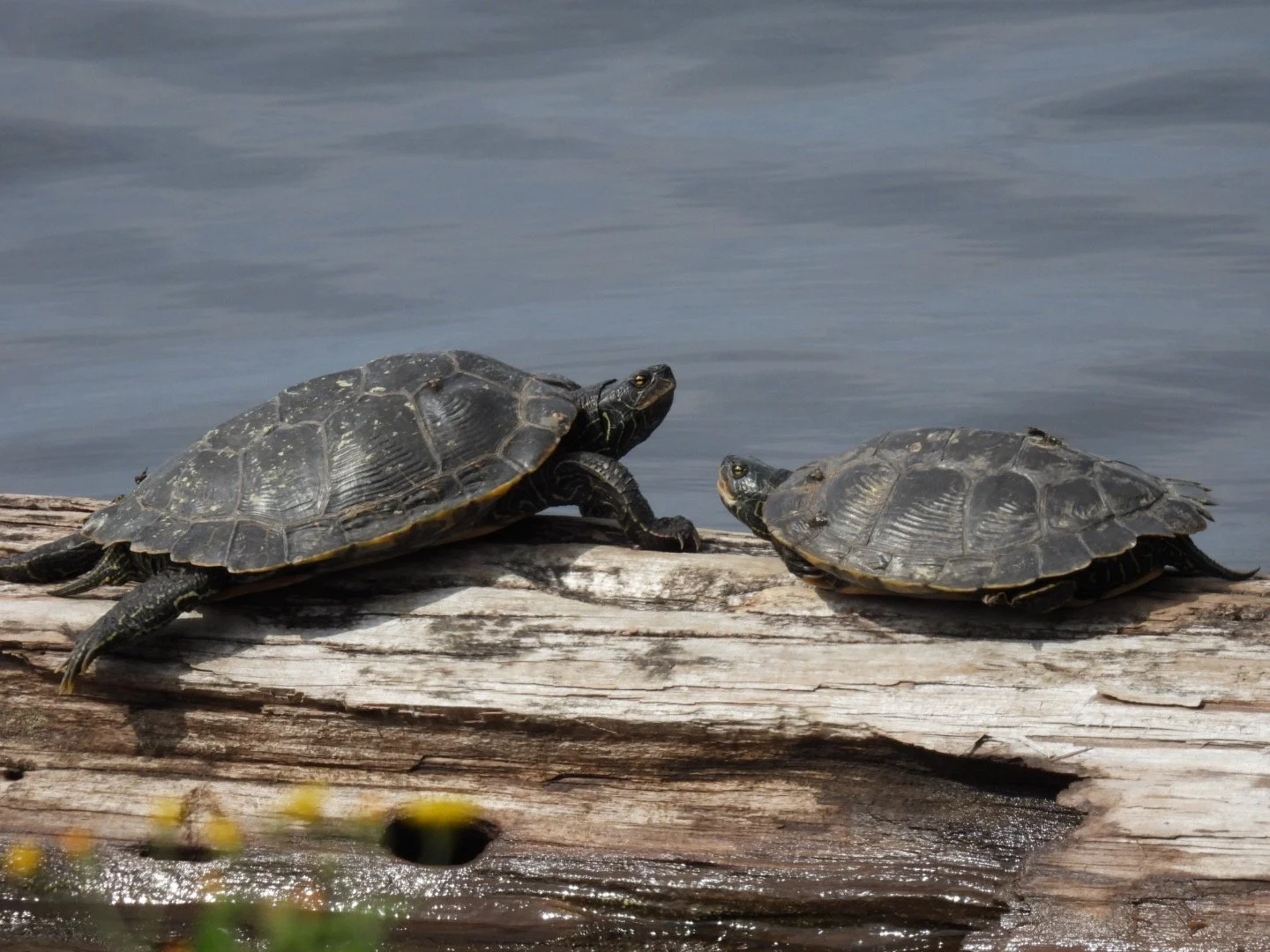
Proto credit: Lucas McLennan - Northern map turtle
If you spend enough time around Muskoka's lakes, backroads, marshes, and cottage-country ditches, you eventually meet one of the region's oldest residents: a turtle on a mission. It might be a painted turtle slipping off a log, a snapping turtle lumbering across gravel, or perhaps one of the rarer species moving quietly through a bog or wetland.
Muskoka is home to six of Ontario's eight native turtle species. The most familiar is the Midland painted turtle, the one many people see stacked on sun-warmed logs like little shelled sunbathers. Common snapping turtles are also widespread and, because they are much larger than their cousins, are often spotted crossing roadways. Northern map turtles, Blanding's turtles, eastern musk turtles, and the endangered spotted turtle also live in or near Muskoka.
Muskoka offers lakes, rivers, ponds, wetlands, swamps, marshes, bogs, fens, quiet bays, and shoreline edges. Turtles need water, but they are not confined to it. They are semi-aquatic, meaning they spend much of their lives in water but regularly travel over land for nesting, mating, seasonal movement, and access to summer or overwintering habitat.
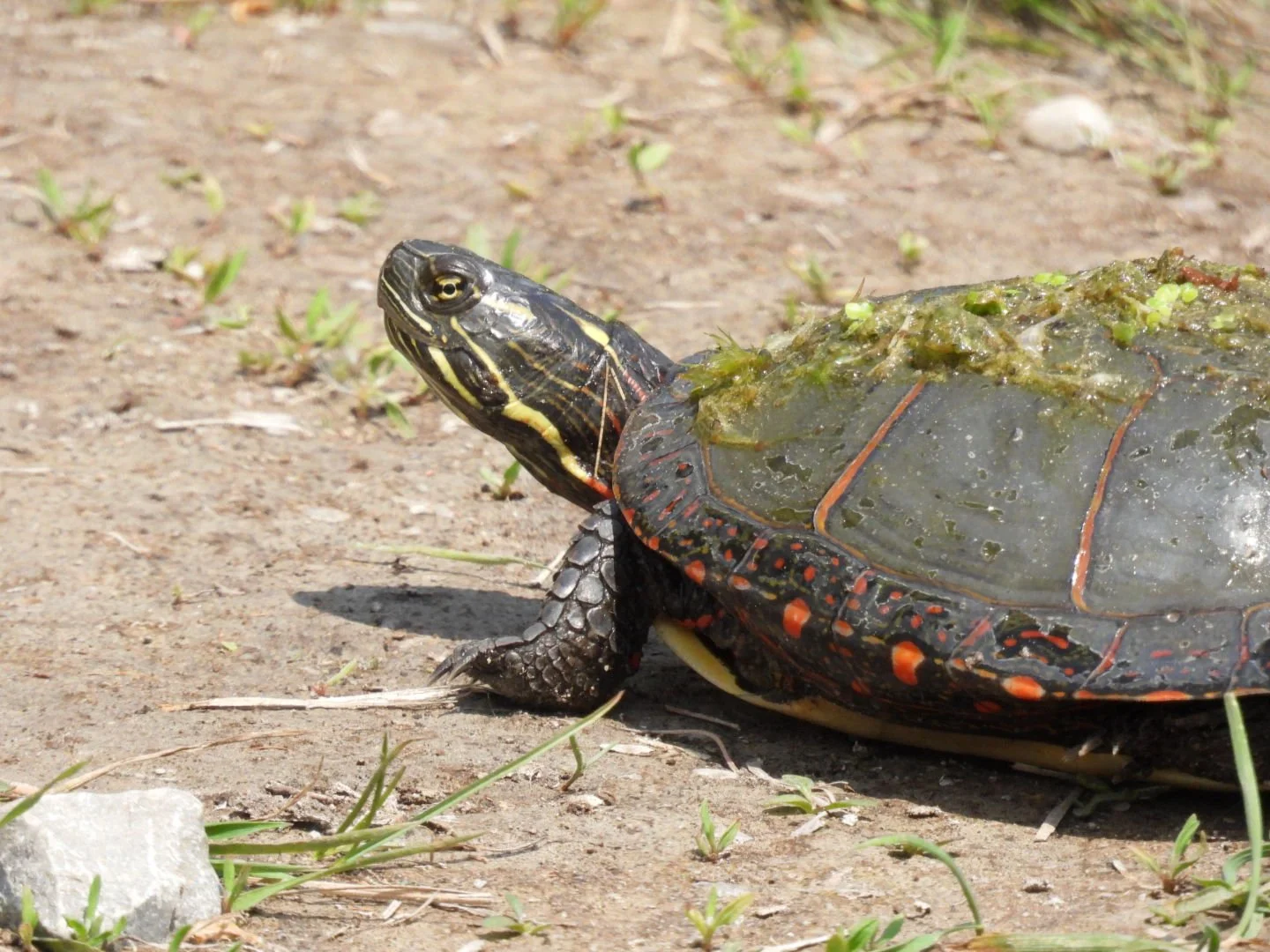
Photo credit: Amanda Porter - Midland Painted Turtle
"The Midland painted turtle and common snapping turtle are the most common turtle species in Muskoka and across the province," explains Amanda Porter, Conservation Manager for the Muskoka Conservancy. "They are considered habitat generalists and can be found in basically all environments with standing water, from lakes and rivers to marshes and swamps."
Painted turtles feed on aquatic plants, insects, carrion, and small aquatic animals. Snapping turtles are opportunistic feeders and help clean up decaying plant and animal matter.
Blanding's turtles are another important Muskoka species, easily recognized by their bright yellow throats and domed shells. They use wetlands, shallow water, and upland routes between habitats. Spotted turtles, one of the rarest species, favour clean, shallow wetlands such as fens, bogs, marshes, and wet meadows. Eastern musk turtles, sometimes called stinkpots, are small, secretive turtles that often remain in shallow, slow-moving water. Northern map turtles are more commonly associated with larger lakes and rivers, where they bask and forage along the shoreline.
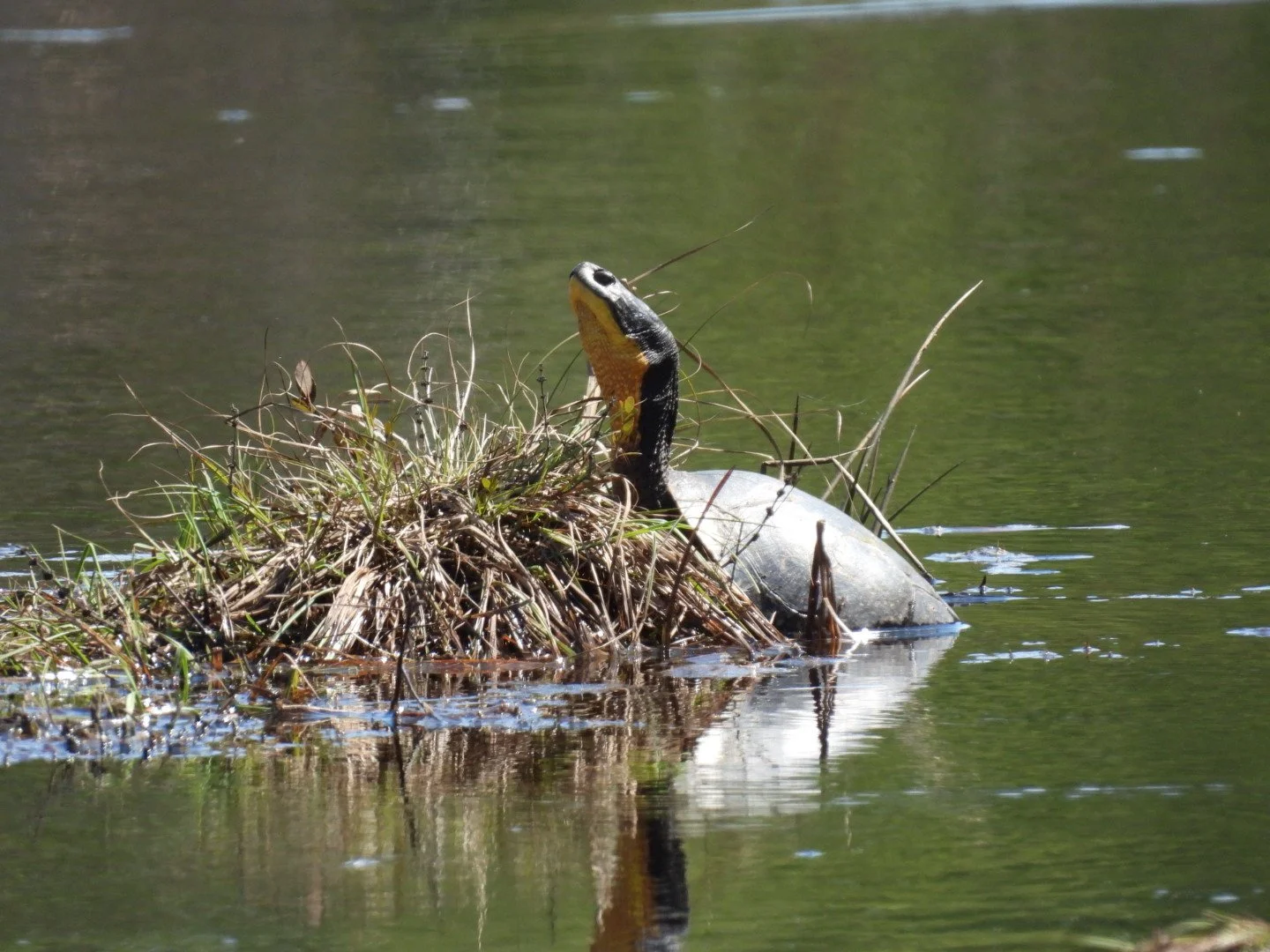
Photo credit: Amanda Porter - Blanding's turtle
When looking across the entire province, Ontario is home to two additional native turtle species: the wood turtle and the spiny softshell turtle.
"Unfortunately, all of Ontario's turtles are listed as species at risk," says Porter. "They are threatened by development and urbanization, habitat fragmentation and road mortality, predation by carnivores like raccoons and foxes, and even poaching for the pet trade."
Turtles on the Move
Spring and early summer are when people notice turtles most. After winter, turtles emerge from lakes and wetlands, warm themselves by basking, and begin moving. Males may travel early in the season in search of mates or new habitat. Females become especially visible during nesting season, which generally runs from mid-May through early July, with June often being the busiest month. They search for warm, sunny, sandy, or gravelly places to lay their eggs. Unfortunately, roadside shoulders often look like the perfect nesting site, even though they are anything but safe.
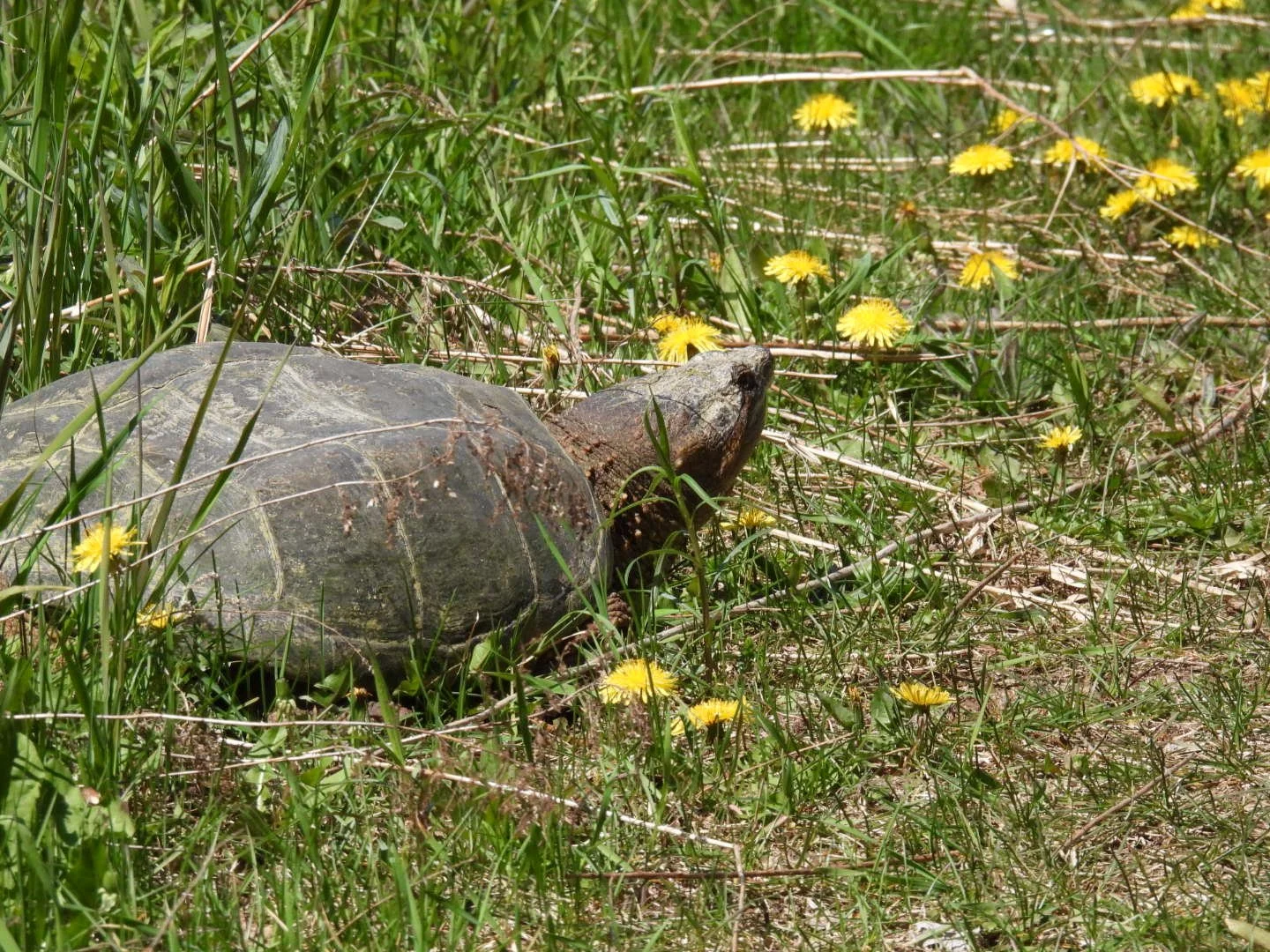
Photo credit: Amanda Porter - Common snapping turtle
That is why you see turtles crossing roads.
"They are not lost. They are not confused. They are following instincts older than the roads themselves."
Some species may travel only short distances, while others move surprisingly far across land. If a turtle is heading away from water, there is usually a good reason. She may be searching for a nesting site. He may be moving between wetlands. Either way, the turtle knows exactly where it wants to go.
"Although some turtle species may live up to 100 years of age, the lifespan of most species is around 50 years," says Porter. "Unfortunately, many of them do not make it to that age due to nest predation, road mortality, and habitat loss. It takes a long time for them to become sexually mature. For most species, they cannot begin laying eggs until they are between 10 and 25 years of age."
Their behaviour follows the weather. Turtles are ectotherms, meaning they rely on outside temperatures to regulate their body heat. Warm, sunny days bring them out. Cool days slow them down. They bask to recharge, move when conditions allow, and settle back into wetlands and lake bottoms when colder weather returns.
"Turtles are important members of the ecosystem and food chain," says Porter. "They help keep our waterways clean by feeding on decomposing plant and animal matter, and they are also an important food source for many species of carnivores, large and small."
This means every adult turtle matters. A turtle crossing a Muskoka road is not just wildlife passing by. It is part of a long, fragile story that continues to unfold across our lakes, wetlands, and shorelines.