
By Chris Occhiuzzi
From easy local routes to ambitious backcountry adventures, Lowell Greib shares how to explore cottage country safely, responsibly, and in every season.
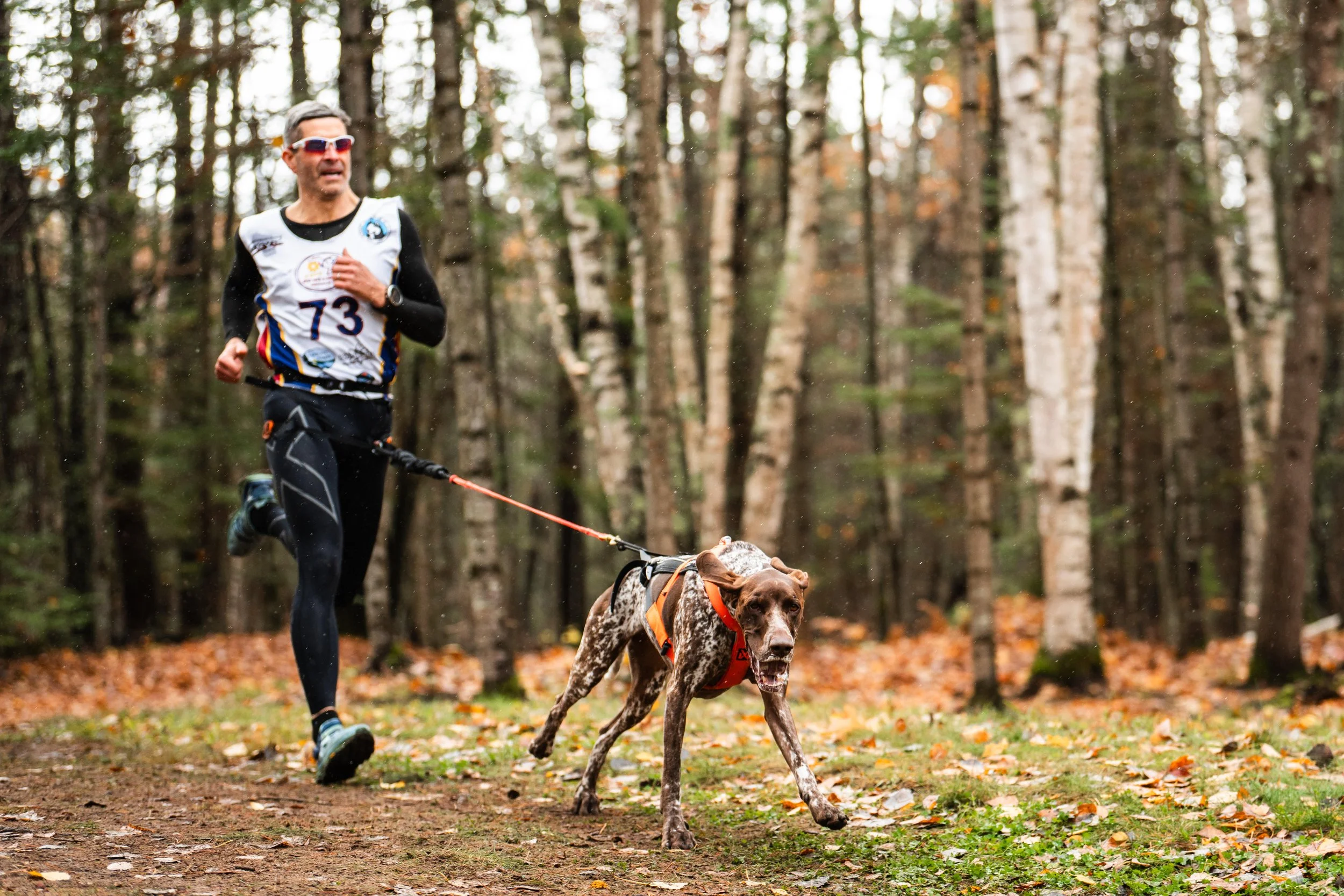
Photo. DanielTphoto
Most people who have cottaged, visited, or lived in Muskoka have had the epiphany of wanting to “get more active” in the land of lakes, rocks, trees, and trails. Doing so is a lot easier than most believe, and the opportunities are waiting everywhere.
Muskoka’s trails offer a four-season playground for running, hiking, mountain biking, gravel riding, fat biking, and, when winter properly shows up, snowshoeing, skijoring and other dog harness sports.
The trick is knowing where to go, how to prepare, and how not to be that person who treats every groomed path like it was personally installed by the trail fairy.
Parallel Muskoka caught up with Lowell Greib, owner of The SportLab, a seasoned runner and outdoor athlete who is deeply involved in dog harness sports in the region and beyond. When Lowell talks about trails, dogs, gear, terrain, and respecting the landscape, he is not speaking from the comfort of a theory chair. He has been out there, sweating, climbing, freezing, navigating, and occasionally being powered along by a very enthusiastic four-legged teammate.
Start Close, Then Go Deeper
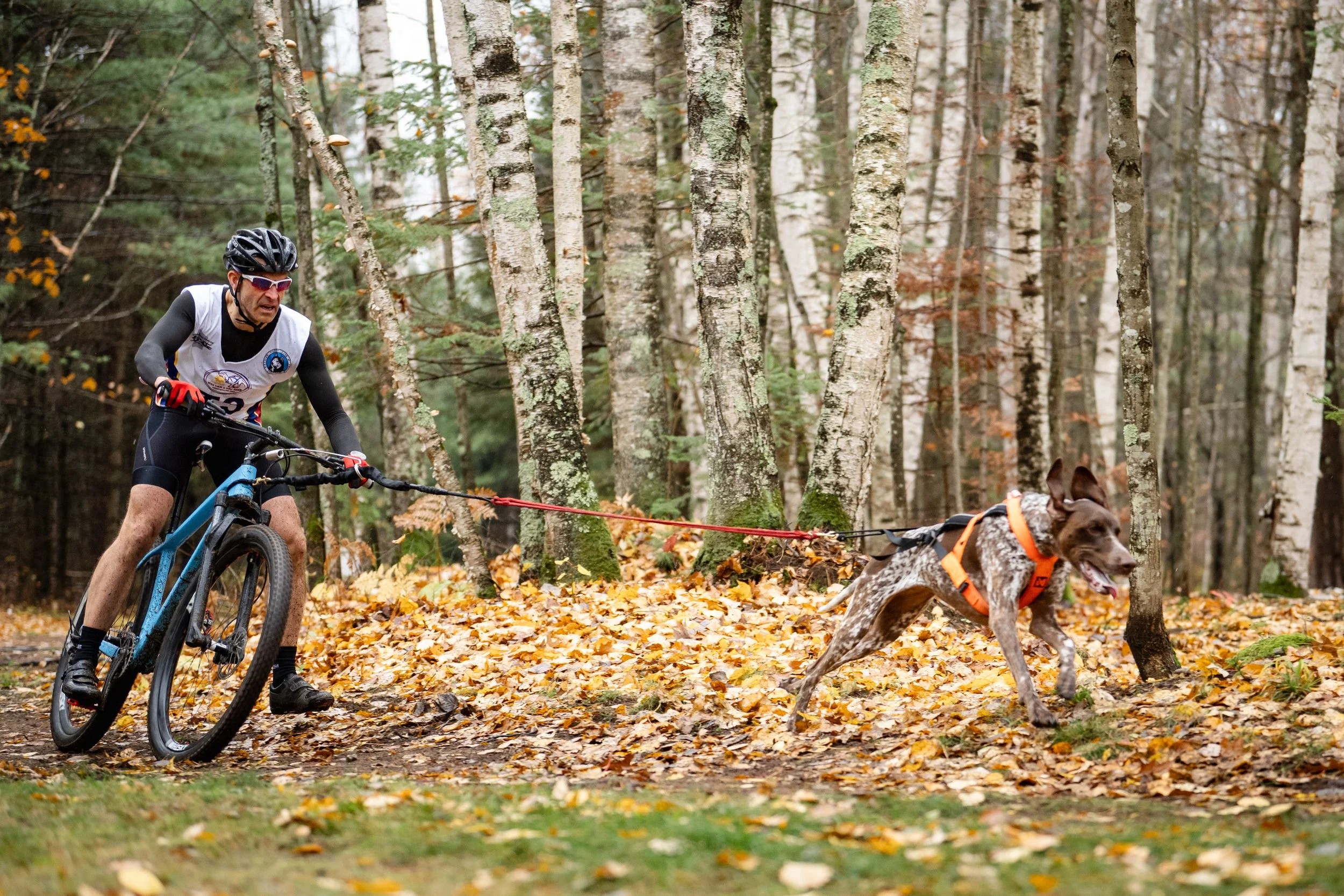
Photo. DanielTphoto
For those easing into trail life, Lowell says the best place to begin is often right in the community. In the Huntsville area, familiar routes like the Hunters Bay Trail and the Fairy Vista Trail are accessible, manageable, and ideal for daily walking, running, or taking the dog out for something more inspiring than another lap of the driveway.
“They’re great for daily hiking or dog walking,” Greib says, noting that these familiar trails are perfect for building confidence before heading into more rural terrain.
After that, the trail menu gets deliciously more Muskoka.
Arrowhead Provincial Park, he says, is “right in our backyard” and offers excellent trails for both summer and winter use. The Arrowhead Lake Trail is about five kilometres, with the Beaver Meadow section offering an added option. The Stubb’s Falls Trail and Lookout Trail are shorter, scenic choices that deliver that classic Muskoka reward: forest, rock, water, and just enough elevation to remind your legs they signed up for something.
Cottagers should remember that provincial parks require the proper day-use permit or pass. This is not merely bureaucratic hoop-jumping; it helps manage access and maintain the places we all enjoy.
Water, Vistas, and the Joy of the Trail
Beyond Huntsville, Lowell points to Lake of Bays trails, especially Limberlost Forest and Wildlife Reserve, as outstanding day-use destinations. The trails there are well maintained, scenic, and, as he puts it, generally “non-technical.”
Translation: you can enjoy yourself without feeling like you accidentally entered a mountain goat audition.
“They’re beautiful, some very amazing vistas,” he says. “Undulating terrain.”
One of his favourite things about many - Limberlost’s central trails is how they follow water.
“You’re going to have water at your side almost the entire time around the trail,” Greib says. “It makes for a very beautiful trail, and you get some natural cooling.”
For the Ambitious Crowd
Lowell notes that Muskoka is the gateway to Algonquin Park, and that opens “a whole different door.”
Day-use trails range from short, accessible walks to more demanding routes, while experienced trail runners may look to the Western Uplands Backpacking Trail or Highland Backpacking Trail for a proper adventure.
He has run Western Uplands before, pointing out that its loops stretch roughly from the low 30-kilometre range to more than 80 kilometres. These are hiking trails by design, not casual “let’s squeeze this in before brunch” outings. But for seasoned trail runners, they offer a serious single-day challenge.
“Algonquin has hundreds of kilometres of trail,” he says, adding that many are easily accessed and can be used by a wide range of people, provided they match the route to their experience.
Two Wheels, One Muskoka Smile
Beyond running and hiking, there are wonderful options for mountain biking, and not simply on the bikes we grew up with.
Lowell has witnessed gravel biking becoming extremely popular because it gives riders more options. A gravel bike, he explains, is “more like a road bike with a different tire” than a mountain bike. With wider tires and a road-style riding position, it can handle paved roads, gravel roads, and some packed trails.
That means morning rides can expand beyond the same familiar loop past the marina, the bakery, and the neighbour’s place where nobody is entirely sure whether that new bunkie was permitted.
Gravel bikes let riders connect backroads, old summer roads, and trail networks in a way that feels adventurous without necessarily requiring a full mountain-bike commitment.
In winter, fat biking offers another way to stay active when the snow piles up and the cottage driveway becomes a character-building exercise. The big tires offer surprising grip and float, making snowy trails feel less like punishment and more like play.
Dogs, Skijoring, and Respect
Lowell’s dog harness sports experience, which includes competing and medalling at both national and international events, allows him to share his knowledge with others. He even started @wethesled on Instagram to offer tips, advice, and information about dog harness sports events.
One of these sports is skijoring, where a dog helps pull a skier along a trail. It can be an incredible winter activity for the right dog and handler. But, like all trail use, it requires control, preparation, and respect for others.
“People go on their own, but they also take their pets,” Lowell says. “There are innate pieces of respect that we also need, and that is our natural environment.”
An important reminder for everyone heading out with furry family members is that dogs must be kept under control, especially around wildlife.
Lowell warns that pets cannot be allowed to chase or disrupt animals such as deer or moose, particularly during sensitive seasons when wildlife is more vulnerable. This is one of the reasons leash rules exist on park trails.
Meanwhile, on Crown land, private land, snowmobile routes, ATV trails, or old logging roads, users must understand where they are and whether they have the right to be there.
Some snowmobile or ATV trails cross private land and are accessible only because clubs have seasonal agreements with landowners and maintain them.
“The one caution is you want to make sure that when you’re using a trail, that it is not a private trail where you need special permissions,” he says. “As a user, you want to be respectful of that and not create issues.”
Download Before You Disappear
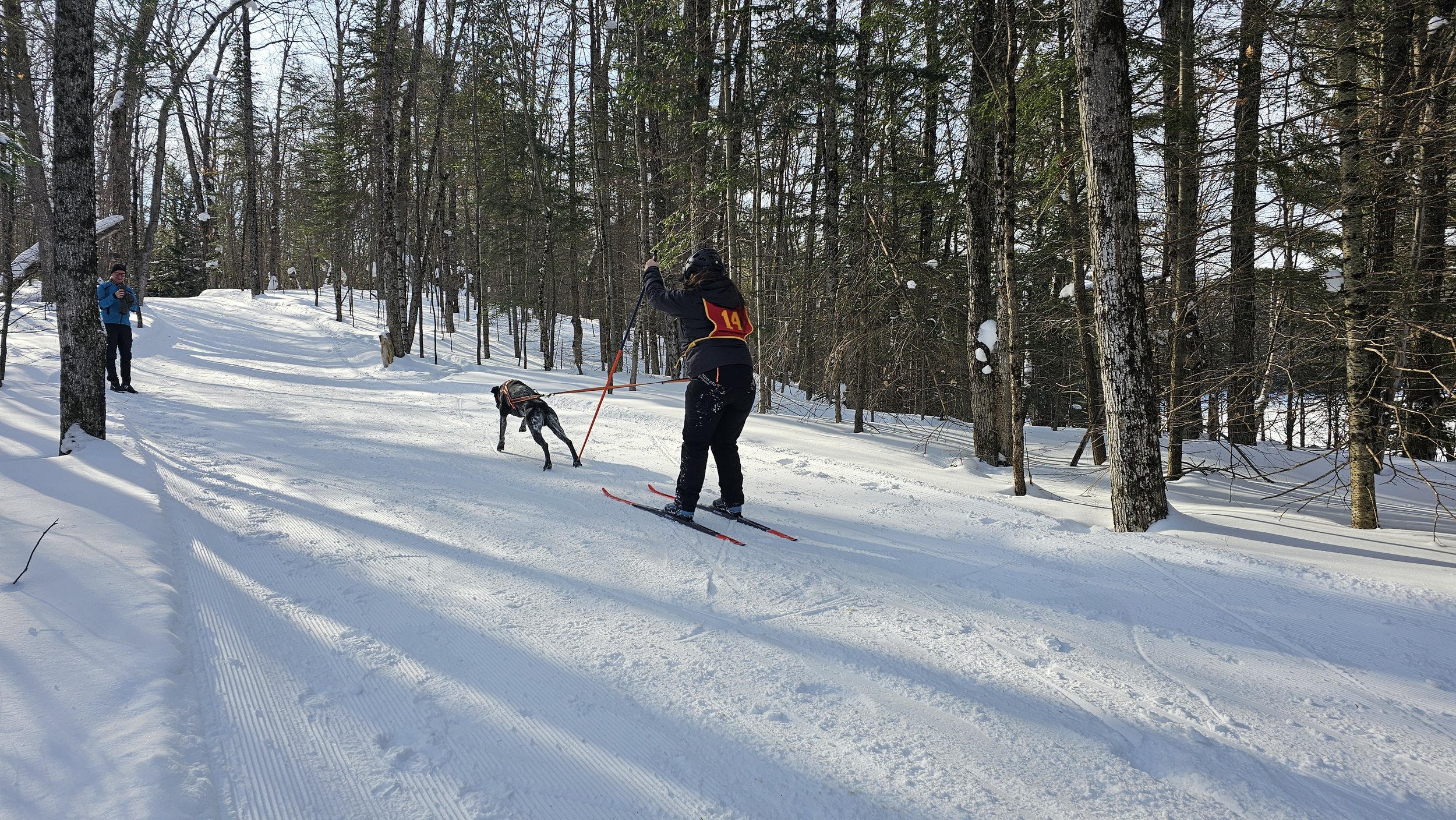
Photo. Chris Occhiuzzi
One of Lowell’s smartest practical tips is to use trail and mapping apps that allow offline downloads.
Muskoka cell service can be, let’s say, emotionally inconsistent. Your phone’s GPS may still work, but if you cannot download the map because you are standing beside a swamp holding one bar of hope, that is not ideal.
Download maps in advance, tell someone where you are going, carry water, dress for changing weather, and choose routes that match your ability.
Muskoka trails are beautiful, but they are still real trails, with roots, rocks, hills, bugs, mud, snow, and the occasional moment when you wonder why you complained about traffic when this was apparently the alternative.
The reward, though, is worth it.
Whether you are running beside water at Limberlost, climbing through Algonquin, pedaling a gravel road, fat biking after a snowfall, or skijoring with a dog who is clearly having the best day of anyone in the family, Muskoka’s trails offer a deeper way to experience cottage country. And sometimes, the best adventures begin just beyond your own backyard.